
 By James Parsons
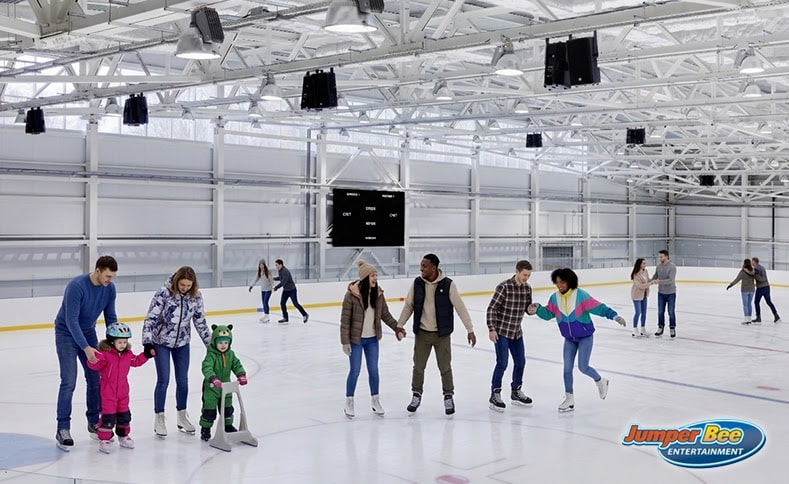
An ice rink event is a great idea right up until the planning starts. Questions about how much space 50 skaters need on the ice (and what to do if the rink turns out to be too small) can send even an experienced event planner deep into a frustrating pile of conflicting numbers, vague vendor estimates and space laws that were pretty obviously written with competitive hockey players in mind - not for a group of adults wobbling around in rental boots for the first time. The stakes here are actually much higher than organizers usually give them credit for. In my experience, it’s one of the decisions that either blends quietly into the background when it’s done right or ends up being all anyone can talk about when it’s not.
Most rink operators and industry sources recommend planning for about 50 to 75 square feet per skater for recreational use. With 50 skaters on the ice, that puts your target rink size between 2,500 and 3,750 square feet - a fairly wide range and intentionally so. A handful of variables can pull that number in either direction, and they’re worth thinking through before you settle on a size.
A skater’s experience level is probably the biggest part of this. Beginners need more room to move around - they’re going to fall, wobble and need more space to recover without running into each other. The type of event matters too - a relaxed open skate runs very differently from a structured session with multiple activities going on at once. It also matters if everyone gets on the ice at the same time or in staggered waves throughout the session. And the shape of the rink comes into play as well. Tight corners and narrow ends can eat up a decent chunk of your usable space.
None of these are small details to overlook. Any one of them can affect what rink size ends up being the right call for your event.
Let’s find the perfect rink size to keep all 50 skaters happy!
How Much Space Does a Skater Need
Skill level plays a big part in why the range ends up being so wide. A practiced skater tends to glide in predictable lines and doesn’t take up all that much space. Beginners are in a very different situation - new skaters wobble, drift sideways without any warning and stop suddenly by grabbing the wall. That unpredictability means each beginner needs more space around them than a confident skater does - even if the headcount is the same.
With a group of 50, if most of your skaters are beginners or young kids, you should lean toward the higher end of that range. It’s a bit easier to run a session with a little room to spare than to try and manage one where they’re always in each other’s way.
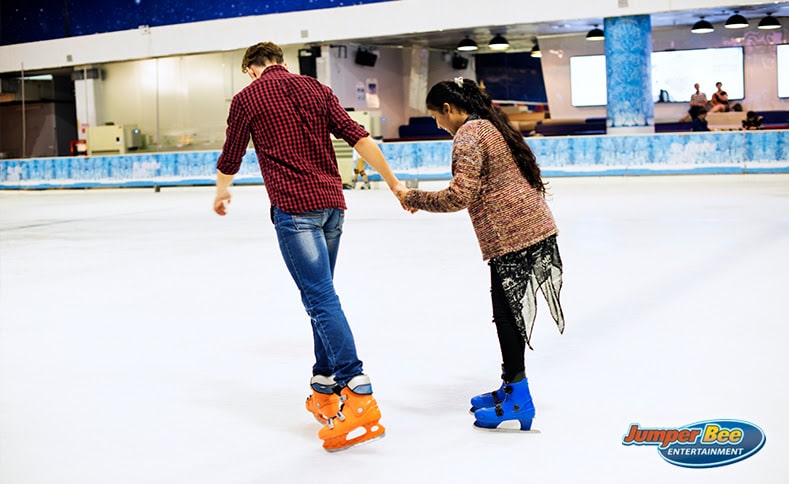
Experienced adult skaters are a different story - they’re great at reading the ice around them and moving around on it without much thought, so the lower end of the space range works just fine for a group like that. The tough part is that most groups are some combination of the two. A birthday party will usually have a handful of confident skaters alongside a dozen kids who’ve never laced up before. A corporate event can have that exact same split. The safest move in either case is to plan for more space instead of less. The extra room doesn’t cost you anything, and a rink that runs too tight makes the whole session harder to manage - and way less fun for everyone on the ice.
When in doubt, my default is always to give a little more space. The extra room on the ice has never once ruined a session - but a crowded rink sure can.
The Best Rink Size for Fifty Skaters
For a group of 50 skaters, the math is pretty easy to work out. With 50 to 75 square feet of ice per skater, a group that size would fall between 2,500 and 3,750 square feet of usable ice surface.
Raw numbers can be hard to visualize without some context, so a couple of familiar comparisons should help with that. A standard tennis court measures about 2,800 square feet, which lands you right in the middle of that range. Half of a basketball court runs around 2,350 square feet, which puts you near the lower end of that range.
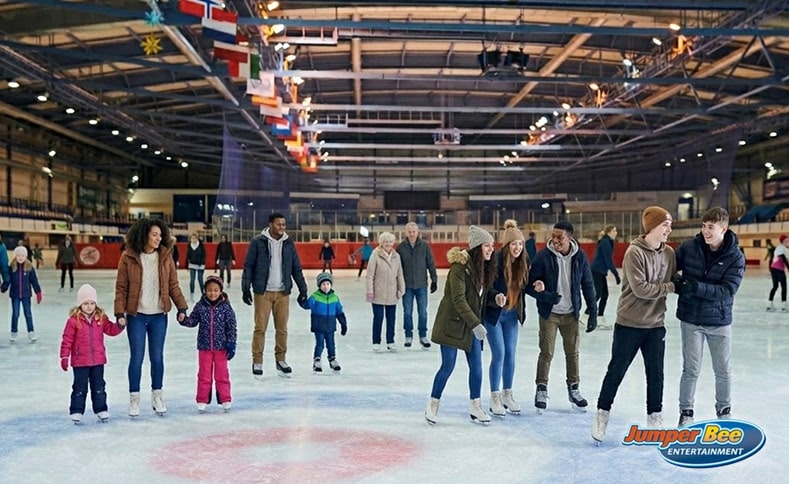
For a group of this size, a 50 by 70 foot rink is a target - that’s 3,500 square feet total, and it gives everyone enough room to move around comfortably. If space is a little tighter, a 50-by-60-foot rink at 3,000 square feet is a workable minimum that still gets the job done.
A rink that’s too narrow will feel cramped and wrong, regardless of what the measurements say on paper. Skaters move in wide loops and arcs, and they need enough width to make those turns comfortably - a long and skinny rink just doesn’t skate the same way that a well-proportioned one does. In my experience, it’s one of the details that gets missed most in the whole process, and it shows once everyone is actually out on the ice.
Guests Drift On and Off the Ice
Those numbers from the last section assumed all 50 guests would be on the ice at the same time. In practice, it almost never works out that way.
At a normal event, only about 30 to 35 guests are actually out on the rink at any given time. Everyone else has wandered off for a snack, a quick breather, or just to lean against the rail and watch. That natural in-and-out rotation is pretty forgiving on space - a slightly smaller rink can still fit a group of 50 without feeling packed. It’s worth keeping that in mind as you plan.
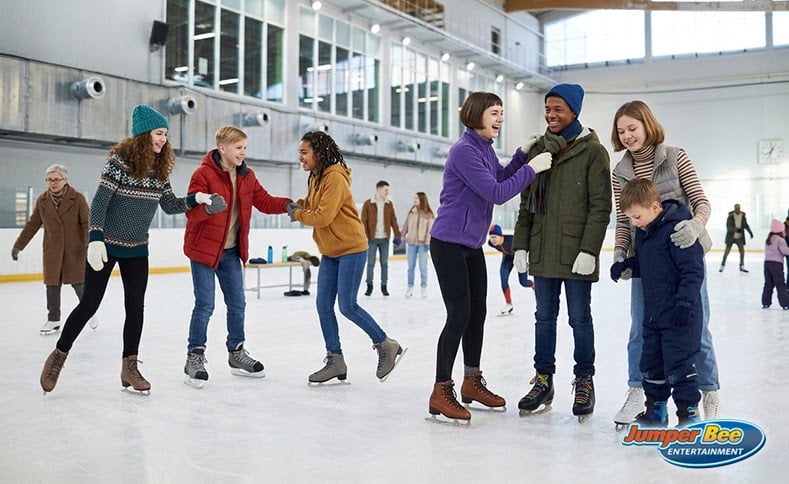
The guest count is one part of the picture - what matters just as much is the type of event you’re hosting and how it’s going to play out. A children’s birthday party tends to be a high-energy event where kids want to be on the ice the whole time and almost never take a break on their own. A corporate holiday mixer works out quite differently - plenty of adults are going to rotate between the rink and the snack table, and a fair number will be more than happy to just stand on the sidelines with a drink in their hand. It’s the same number of guests but very different rink needs.
The age group and the event type also play a role here. Younger crowds are usually more active, and the ice tends to stay busy for much longer stretches. Adult gatherings with food and drinks usually have a more relaxed rotation - guests drift on and off the ice at their own pace throughout the evening.
What your guests plan to do on the ice (if they want to skate the whole time or just use the rink as a backdrop to a bigger get-together) will do more to point you toward the right size than the raw headcount ever will.
A Crowded Rink Puts Everyone at Risk
No matter how well you plan it all out, there will always be a time or two when a large group rushes onto the ice all at once. With 50 guests at your event, that’s just part of the package.
A small skating surface fills up fast, and once it does, everything on the ice changes. The gaps between skaters practically vanish. Movement gets unpredictable, and all it takes is one stumble to bring a few others down with it - and from there, the whole situation just cascades.
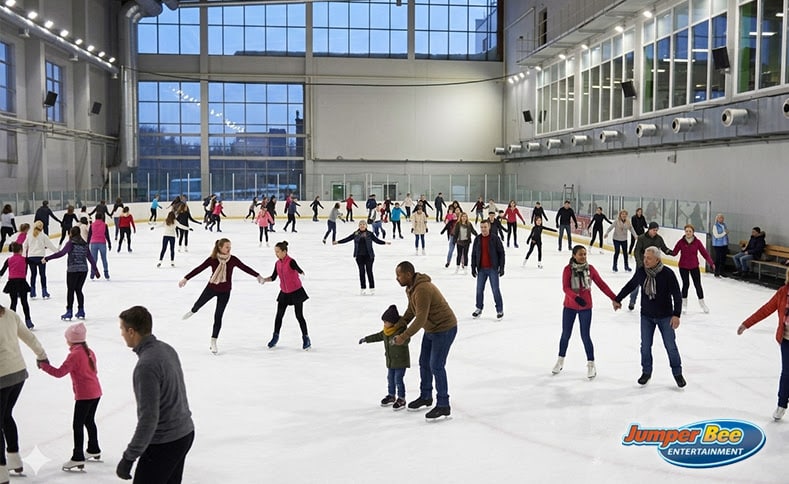
Mixed skill levels on the same sheet of ice can get messy fast. A confident adult skating at full speed doesn’t always register a child who is still wobbly on their blades, and the gap in ability can quickly turn into some pretty bad falls. Ice is unforgiving, and the wrong collision can do damage. At the worst end of it, everyone piles onto the ice at the same time, and the rink gets dangerously crowded.
A little extra square footage makes a real difference. With more room on the floor, the faster skaters aren’t always forced to weave around the slower ones, and beginners have enough space to wobble and recover without it becoming anyone else’s problem. That extra room doesn’t come up much in the planning phase, but once the event is actually underway, it pays for itself almost immediately.
No rink size will make your event totally safe - it’s just part of putting a large group on the ice. But a roomier surface makes the odds of a collision much lower, and for a group of 50, that sense of relief is well worth the extra square footage. The sizing choice tends to feel like a pretty easy call in hindsight when everyone walks off the ice happy and in one piece.
Make the Most of a Small Rink
A great way to manage the flow is to divide everyone into groups of around 20 to 25 and run back-to-back timed sessions, instead of a full crowd all on the ice at once. For session length, somewhere in the 15 to 20 minute range tends to work well for most groups - it’s long enough for everyone to have fun out there but not so long that the ice starts to feel overcrowded or chaotic. You can also adjust the session length based on how many groups you have and how the day is structured, so there’s some flexibility built in.
This rotation also helps quite a bit for beginner skaters. With a smaller group on the ice at any given time, everything gets noticeably calmer - less noise, less movement and far less pressure on anyone who has never laced up a pair of skates before. New skaters feel more comfortable when they actually have room to move at their own pace and find their footing without a crowd around them. That extra space can change the whole experience for a first-timer, and it’s one of the biggest reasons this works as well as it does - it also gives any staff or volunteers on the ice more room to help those who need it (a great added benefit).
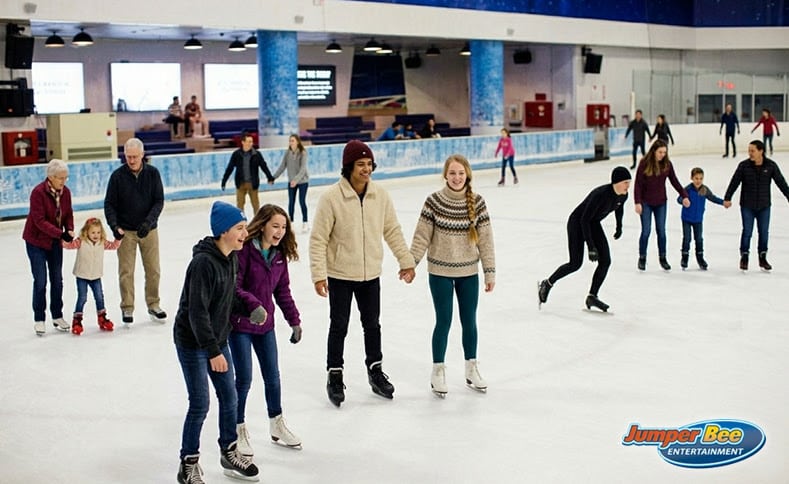
As for the rink itself, a smaller space used well can compete with a bigger one. A well-planned rotation schedule will keep it fun and safe for everyone, and it won’t stretch your venue budget any more than it needs to. If anything, this structure tends to make the whole event feel more organized - it’s something guests tend to like.
How Rink Shape Changes the Flow
The shape of your rink has a much bigger effect on the skater flow than you give it credit for. A rectangular layout tends to be the default starting point for most venues, and there’s a real reason for that - it’s familiar, it works in most spaces, and it’s easy to picture in your head. But a narrow rectangle has a way of pushing skaters into tight clusters at each end, and once that starts to happen, the whole floor gets congested pretty fast.
An oval layout is worth a look if your venue can support it. The curved edges guide skaters into one continuous circular path with everyone moving at a much steadier pace than you’d get with a more angular setup. Rounded corners deserve a fair chunk of the credit here - with sharp corners, everyone tends to funnel into the exact same point at the same time, which usually turns into a pretty bad congestion problem. A square rink falls right in the middle between those two options. The layout gives you a bit more total floor space than a narrow rectangle would. But it also loses that natural directional pull that an oval creates on its own.
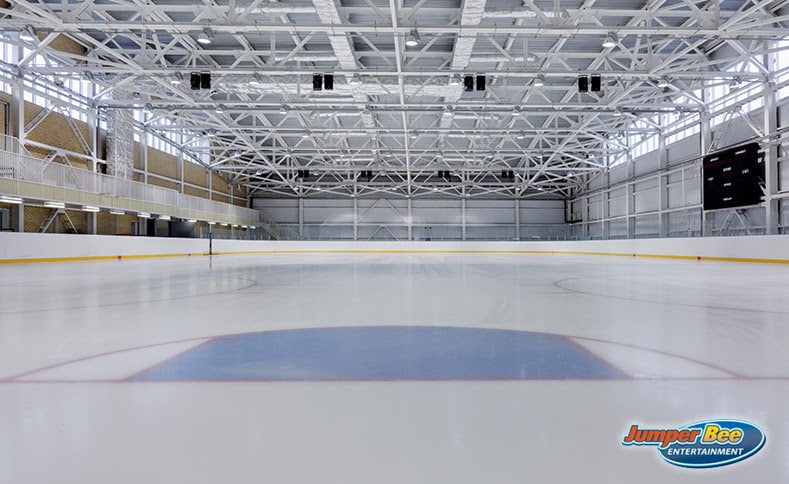
The physical layout of your venue will make most of these decisions before you even get a chance to weigh in on them yourself. A long ballroom, a square gymnasium and an outdoor courtyard all have their own set of limitations, and those constraints will push you toward one shape or another. Before you land on a layout, it’s worth walking your space and taking careful measurements and then thinking about which direction skaters are most likely to drift on their own. That second part tends to get glossed over in the planning stage, and it matters in how well your layout actually performs.
Portable Rinks That Work for Any Event
Portable rinks are one of the more basic options for spaces where a permanent installation would never make sense - and they actually come in two main varieties that are worth a look. Synthetic ice and refrigerated setups are built from modular panels that lock together, which means you can configure them into just about any size or shape that fits your space.
Synthetic ice panels are made from a slick polymer material that mimics the feel of ice. Normal skate blades work fine on them, and no refrigeration is needed. Refrigerated portable rinks work a little differently - they run a chilling system that freezes a thin layer of water ice right on top of the panels, which brings the experience much closer to a traditional rink. The tradeoff is that the setup is more involved, and it costs noticeably more to run.
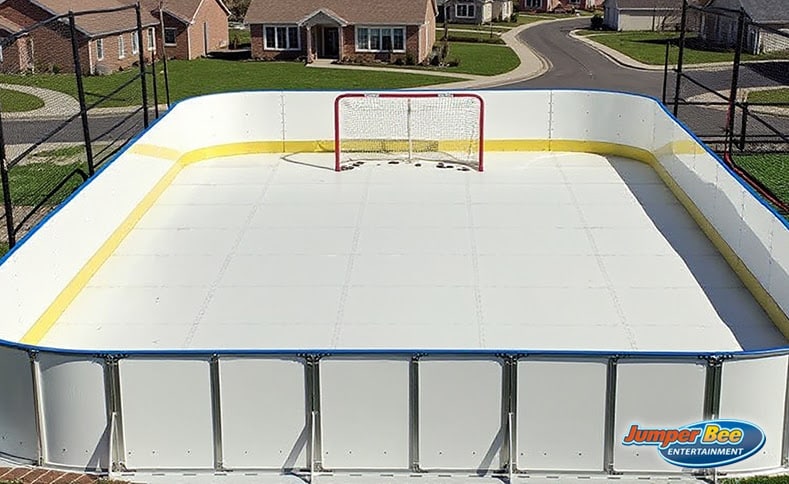
Modular panel design is one of the more underrated features of either system, and it matters all the time. The panels are all built in standard sizes, which means you can add or remove sections to match whatever square footage you need. Even if your headcount climbs from 50 to 70 in the weeks before your event, you have options to scale up without having to start over from scratch.
For a group of around 50, that flexibility can legitimately change how the whole event comes together. A layout that’s built around your estimated headcount can be tweaked and adjusted as your final numbers solidify, and most rental vendors will sit down with you well ahead of time to talk about the whole floor plan, which removes a bit of the uncertainty from the process - and if you’ve ever planned an event before, that’s usually where the stress tends to pile up.
Location flexibility is also one of the biggest upsides of a portable rink. Parking lots, event halls, hotel courtyards and just about any other reasonably flat surface can all work quite well as a venue.
Make Your Party Unforgettable
An ice rink event for 50 guests is one of the situations where the little details actually matter quite a bit. The upside is that once you’ve worked through the space-per-skater math, figured out how your guests are going to move around on the ice and looked at your rink size options, the whole choice gets much easier to make. The 50-by-70-foot layout has become the most popular option for groups of this size for a reason - it hits the right balance without going overboard on space or cost.
One detail worth tackling ahead is how you’re looking to use the space past the skating itself. You might need a section off to the side for younger kids or first-time skaters. There could be tables and a music setup or other pieces of equipment sharing that space. These are the types of details that can change your rink size choice pretty fast, and it’s better to sort them out early than to realize you’re short on room the day of the event.
At Jumper Bee, we’re the top party rental company in the greater Dallas-Fort Worth area, and this type of event is what we do. Water slides, arcade games, inflatable bounce houses and carnival games - we carry all kinds of equipment that can make any party memorable. Whether it’s a birthday celebration, a school event or a company party, we have the inventory and the experience so you can pull it off well.
Ask us for a free quote, and we would love to help make your next event one that everyone is still talking about long after it’s over - with Jumper Bee Entertainment!
Leave a comment
Be the first to share your thoughts.