
 By James Parsons
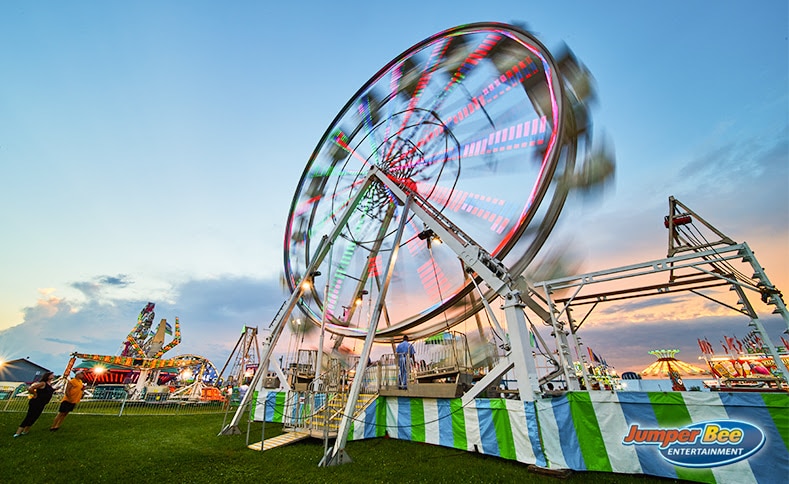
Outdoor events with carnival rides bring with them a long checklist - vendors, permits, timelines, safety inspections and roughly a hundred other moving parts all compete for your attention at once. Power almost never makes it to the top of that list, at least not until something goes wrong. A tripped breaker on a busy Saturday afternoon or a generator that just can’t manage the load will take the whole event down with it at the wrong time.
The electrical side of a carnival setup is far more involved than it tends to look on paper. Ride size, ride quantity and venue type all drive power demand in very different directions and none of them are small variables. A single small inflatable draws a fraction of the power that a full mechanical ride (loaded up with lights and a motor) actually needs, and the difference between those two alone is pretty dramatic. Add a few more rides to that, plus vendor booths and venue lighting, and the total load can climb very fast.
Power is an area where mistakes show up fast - and usually at the worst possible time. A first step is to get the electrical specs from your ride operator’s rental agreement, as most of them will have this spelled out. From there, an electrician or a power specialist can review the full load before the event day, and it’s well worth the extra effort to make that happen.
Let’s talk about what you’ll realistically need for your upcoming carnival ride rental!
Not All Rides Need the Same Power
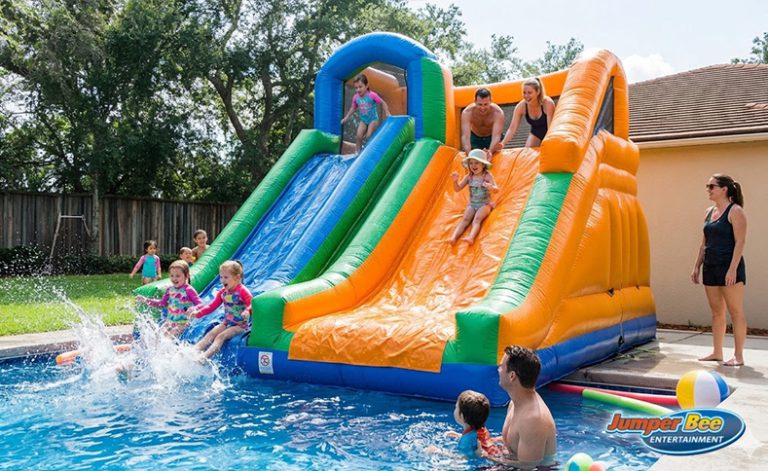
Small inflatables are actually a great place to start for power. Most of them run off a standard 120-volt outlet at around 20 amps - the exact same outlet that you’ve already got in your living room. Events that are mostly inflatables probably won’t give you much trouble on the power side.
With the bigger mechanical rides, the electrical needs are much higher. Most of them need 240-volt or 480-volt three-phase power, which is the type of electrical supply you’d normally find wired into a commercial building - not something that you’d usually have available in a backyard or at a rented outdoor venue.
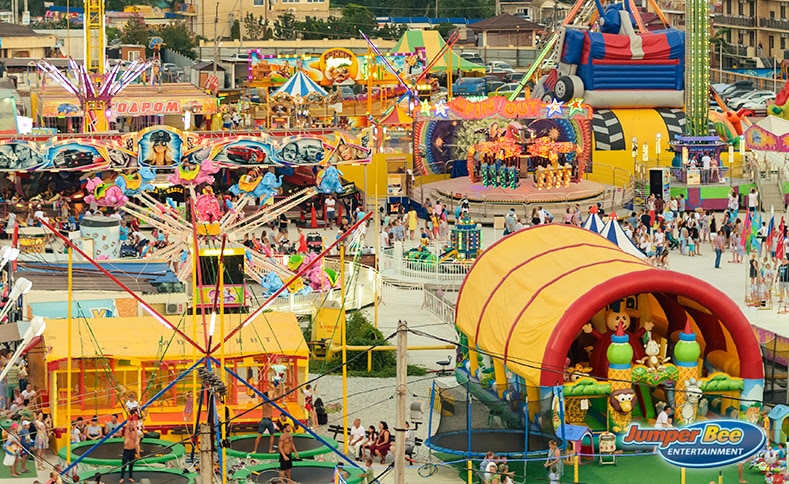
The difference between those two ends of the range is pretty wide. On one end, you have rides that literally just plug into a standard wall outlet. On the other end, you have rides that need their own dedicated power source just to get started. Most events fall somewhere in the middle (a handful of inflatables paired with one or two mid-size attractions), but even that combination can get tough fast if you don’t plan it out ahead of time. That’s why it helps to know where each ride falls in terms of power before you finalize a lineup.
A full ride list needs to come first - before you think about electrical needs at all. Get every ride on the list written down, then work out your power needs from there. Trying it the other way around means you’ll almost always have to go back and revise the plan more than once.
What Voltage, Amperage and Phase Mean
Electrical specs have a bit of a reputation for being hard to follow. The three main terms that you’ll find on any ride’s spec sheet are pretty straightforward.
A water analogy is probably the best way to remember voltage and amperage. Voltage is the pressure that pushes water through a hose, and amperage is the volume of water that moves through it. A ride with high amperage draws a large amount of electricity all at once, which is why spec sheets always list numbers side by side. Running short on either one will trip a breaker or leave the motor starved for power.
Phase is the third term, and it can add a bit more depth to what we’ve covered so far. Most homes and smaller venues run on single-phase power, which delivers electricity in one continuous stream. Three-phase power delivers it in three overlapping streams - that overlap is what makes it more stable when heavy equipment is running at full capacity. Carnival rides with big motors and continuous rotation usually need to run on three-phase power for just that reason.
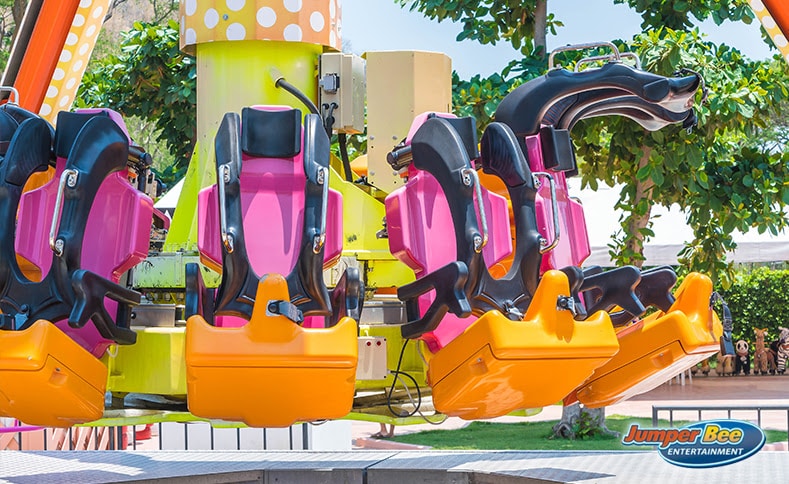
When a spec sheet lands in your hands, those three numbers deserve your attention before anything else. Voltage tells you what power supply the ride actually needs. Amperage tells you how heavy a load it’s going to put on that supply. And phase tells you if a normal single-phase connection will get the job done or if you’ll need a three-phase source on site. All three are worth settling before the project gets too far along - and in my experience, that’s the part that tends to get skipped the most.
Why Your Venue Needs a Generator
Most outdoor venues just weren’t built with carnival ride power needs in mind. A parking lot, a fairground and a backyard all have their own electrical limits - and most of them will fall well short of what even a single ride needs to run safely.
Diesel generators are the standard power source for outdoor carnival setups, and it’s not hard to see why. Most venue electrical systems were never built for heavy ride equipment - a single mid-sized ride can draw anywhere from 25 to 50 kilowatts just to start up and run. A standard utility hookup just wasn’t designed for that demand.
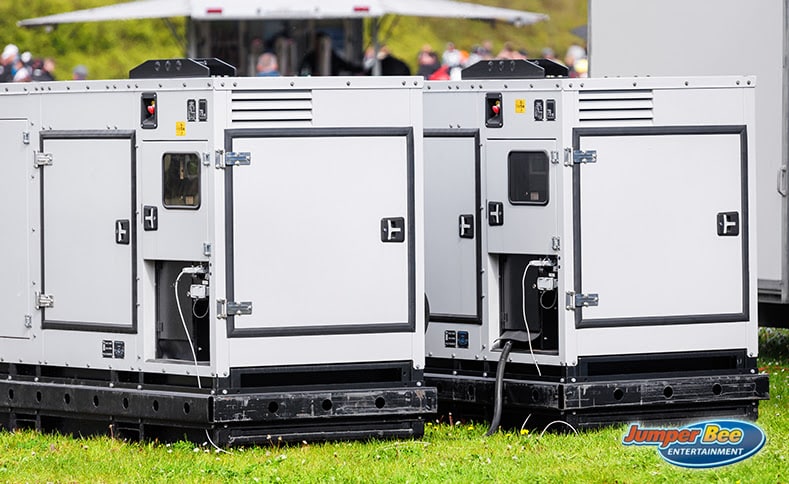
Early on, it pays to take an honest look at your venue’s power situation. A fairground may already have some electrical infrastructure in place - but even that can be in the wrong place or just not rated for the load that a ride actually draws. A parking lot or a backyard is almost certainly going to have nothing usable at all. In either case, a diesel generator is just a basic necessity.
The rental company will usually give you a generator recommendation for each ride, and in my experience, that number deserves more attention than you might give it. Your venue is very unlikely to have enough power on its own. The difference between what a venue gives and what a ride needs is usually far bigger than it looks, and the gap only gets wider when you add the startup draw on top of the steady running load.
More Rides Mean a Bigger Power Draw
One carnival ride on its own is pretty easy to power. Five or six of them running at the same time, though, and the electrical demand multiplies fast.
When multiple attractions run together, the total power draw piles up fast. That combined number is the main figure to plan your event’s electrical setup around - so it’s worth getting right the first time.
A load calculation is how you land on that number - it’s just a matter of adding up what everything on-site will draw at the same time. Get it wrong, and you’re looking at tripped breakers, overloaded circuits or rides that go dark mid-operation - which is about the last situation that you want with a full crowd lined up and ready to go.
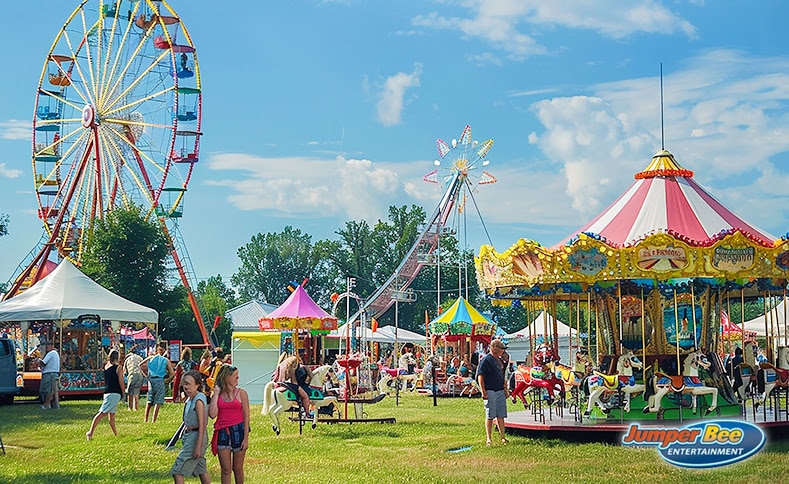
The rides themselves are only part of what you’ll have to account for. The concession stands, string lights, sound systems and even those phone charging stations that guests always seem to gravitate toward - they all draw power, and each extra is easy to lose track of when a big flashy attraction is competing for your attention. Every one of them can add to your total load, and the numbers climb fast.
That’s actually where most of the gaps tend to show up in my experience. A full picture of your power needs (rides, food vendors, lighting, audio and everything else) has to be worked out well before the event starts - not on the morning of. Get that settled early, and everything else on your list will be more manageable.
Why You Need a Power Buffer
Every ride pulls quite a bit more power the second it first turns on than it does once it’s up and running at a steady pace. That startup surge can be anywhere from two to three times the normal running load - and even though it only lasts a second or two, that quick spike is all it takes to trip a breaker if your power supply is already running close to its limit.
That’s why event planners usually build in a buffer of around 20% to 25% above the total expected load. That buffer is the space between what your rides actually draw and what your generator or electrical panel can comfortably support. Without that extra space, a small power spike can take everything offline at the worst possible time.
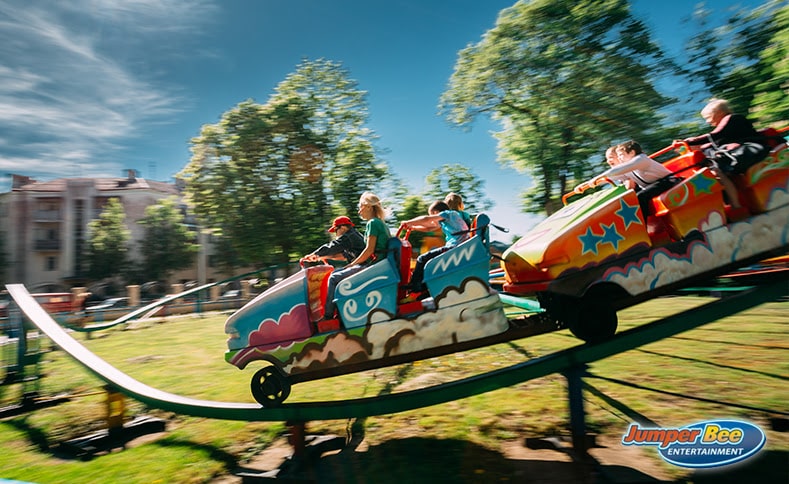
At a packed school fundraiser, a bouncy castle or ride that goes dead in the middle of a session is a problem. The line backs up, the operator has no idea what went wrong, and the whole event just stalls as everyone stands around waiting. It’s one of the more frustrating situations at that point - and also one of the easiest problems to avoid with a little planning ahead of time. That buffer exists for just this reason. A generator that’s sized just barely enough to cover your running loads has no margin left to absorb that startup surge - none at all. Even one quick spike past its rated capacity is all it takes for the whole system to cut the power completely.
Your running load numbers are a decent starting point, but they’re only part of the equation. A 20% to 25% buffer on top of that total is a core part of any reliable power plan, and it should be treated that way from day one.
The Permits and Checks Your Event Needs
The electrical setup is only part of the job - and in some cases, it’s not even the trickiest part. Local governments will want to physically look over a temporary amusement setup before a single ride ever powers on.
Some areas require a licensed electrician to personally sign off on your hookup before the event is legally allowed to run. It’s a detail that you want settled well ahead, not the week before. Last-minute calls to licensed electricians can be expensive and stressful, and they don’t always work out - especially if your event is only days away.
The ASTM F24 standards are also worth a look - especially if your event includes any amusement rides. These are nationally recognized safety standards, and a fair number of states have built their own ride safety codes directly on top of them - so in some cases, you could be dealing with two separate sets of regulations at once. A quick call to your state’s department of labor or agriculture will usually point you in the right direction on what applies to you.
Event planners usually don’t dig into any of this until something actually goes wrong - and by then, the options get more limited.
The responsibility for a legal and safe electrical hookup usually lands on the event organizer. It’s not the vendor, not the ride operator and not anyone else in the mix. A failed inspection can shut the whole event down - and that’s about as bad as it sounds. The upside is that it’s a fixable problem - as long as you catch it early enough to do something about it.
The closer you get to event day, the smaller your window to fix compliance problems gets - and once you’re well into that final stretch, your options are pretty limited. A little research into your local regulations early in the planning process will give you enough breathing room to meet them without any last-minute panic. Most of the problems I come across are avoidable - they just take a bit of homework ahead of time.
The Power Mistakes That Can Ruin Your Event
A pretty common mistake is not accounting for how rides are going to run at the same time. One bounce house doesn’t pull much power on its own - but add three or four units at the same time, and the load can push your electrical setup past its limit fast.
One detail to know before you rent a generator - not every one of them is rated the same way. A unit labeled at 10,000 watts might only hold steady at around 8,000 watts under load, which means the number on the label alone doesn’t give you the full picture. Before you lock in any equipment plan, ask your rental company for the running wattage - that’s the number that actually matters.
Extension cord length is something that tends to get missed. The longer a cord runs, the more voltage it loses along the way - that voltage drop puts extra strain on your motors and forces them to work much harder. A cord that’s too thin or just too long for the run is one of the more common ways that an entire setup quietly fails on event day.
My top advice before anything else - call your venue first. Plenty of outdoor spaces and parking lots have pretty limited access to power pedestals, and the amperage they put out might not line up with what your ride vendor needs to run it right. Lock that information down early, and you’ll cut out unnecessary issues in the days before your event.
A quick call to your venue contact and your ride rental company (with a list of every bit of equipment that you’re planning to run) is usually all it takes. Having the exact model names on hand helps too - it makes the conversation go much faster and gives everyone a concrete starting point to work from.
Make Your Party Unforgettable
The electrical side of a carnival setup is one of the most neglected areas in event planning, and when it fails, the damage is already done. The work you’ve done to get here puts you well ahead of most event organizers, and that’s worth something.
Power planning keeps everything else running when you’re putting a carnival together. A great lineup of rides means nothing at all if the electrical setup behind it can’t hold up. Know the right questions to ask, and most of it starts to fall into place.

The right rental company can take a big load off your plate in event planning. A vendor who knows their equipment well and understands how events run handles a lot of the heavy lifting for you. At Jumper Bee Entertainment, we’re the top party rental company in the greater Dallas-Fort Worth area, with water slides, inflatable bounce houses, arcade games, carnival games and a whole lot more. Reliable equipment paired with planning from the start is what actually makes the difference on event day, and that’s been clear across every setup. Get in touch with us for a free quote, and let’s make your next party one worth talking about.

Leave a comment
Be the first to share your thoughts.