
 By James Parsons
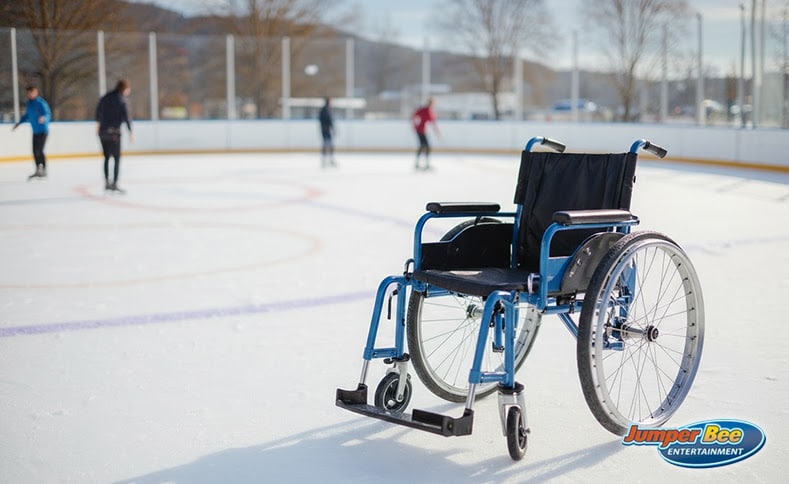
Temporary ice rinks in Texas are actually held to the exact same accessibility standards as permanent venues. It doesn’t matter if your rink is only open for two weeks or two months. The Americans with Disabilities Act applies in full, and so do the state accessibility standards that go along with it. A lot of seasonal operators have this wrong because they believe that the laws are somehow different for temporary installations. They’re not. The Department of Justice has been explicit about this point. These venues count as places of public accommodation, and they also have to meet all of the ADA standards.
Federal penalties are no joke either. First-time violators might get hit with fines up to $75,000. If there’s a second violation, the number jumps to $150,000. Texas courts don’t mess around with this either. They’ve actually issued emergency closure orders against seasonal rinks that didn’t meet fundamental accessibility requirements. Some of these places got shut down right in the middle of their busiest season. The 2010 ADA Standards for Accessible Design spell out the baseline requirements that you need to know. One tricky part is figuring out what counts as “readily achievable” modifications. The answer changes depending on whether your installation runs for eight weeks or four months.
Accessibility problems get worse because of the weather and ice conditions. A well-designed ramp can become useless once the ice starts to melt and water pools up at the base. Wheelchair seating presents significant challenges. The ADA says you need to distribute accessible seats across different price points. It sounds easy enough, but you might accidentally put all of the wheelchair seats in the same corner of your venue. The federal framework for temporary structures has plenty of requirements that we need to unpack.
Here’s what you need to know about ADA compliance for temporary ice rinks!
Federal ADA Laws and Your Temporary Rink
Federal law doesn’t take a break just because your ice rink in Texas is only temporary. The Americans with Disabilities Act has a whole section called Title III that specifically covers entertainment venues and service businesses. Ice rinks fall into this bucket, and temporary ones are no exception.
The Department of Justice has this standard that they use for temporary venues called “readily achievable” modifications. Any changes you make shouldn’t be unreasonably hard or expensive for your goals. This is what their readily achievable standard requires. You need to find a solid balance between what’s workable for your business and what ensures that everyone can safely use your rink and skate there.
An interesting court case actually helped set the guidelines for temporary recreational venues. Disabled Sports USA sued the United States Olympic Committee a few years back, and the outcome created some pretty simple requirements that everyone needs to follow. The case is worth your time because it proved that courts won’t give you a pass just because your facility packs up and leaves after a few months.
How long your rink stays open really matters to regulators. A three-week holiday rink faces way different requirements than one that runs for five months straight. When you cross that 120-day mark, the government treats you almost just like a permanent facility. Every extra day that your rink stays open also adds more regulatory expectations to your plate.
Program accessibility and architectural standards are the two separate beasts you’ll need to wrestle with. Everyone can participate in ice skating and other activities you provide - it’s what program accessibility covers. Architectural standards cover the physical setup of your rink and its surroundings. Most temporary rinks find that they need to prioritize one over the other based on their setup.
The financial consequences for non-compliance are bad enough to ruin any business. Your first violation starts at $75,000 in fines. A second violation doubles that penalty to $150,000!
Routes and Ramps for Your Rink
The first consideration is how visitors are actually going to reach your rink in the first place. Pathways need to be at least 36 inches wide, and that’s the absolute minimum width for a wheelchair to pass through without any problems.
Ramp slopes matter even more to get right. The best slope is 1 - 20 or gentler whenever possible. For every 20 inches of horizontal distance, the ramp only rises 1 inch. Sometimes space constraints mean you have to build something steeper, and you can increase it to 1 - 12. But at that point, you also need to install handrails on each side. A ramp that’s too sharp is impossible for someone to wheel themselves up without exhaustion or worse.
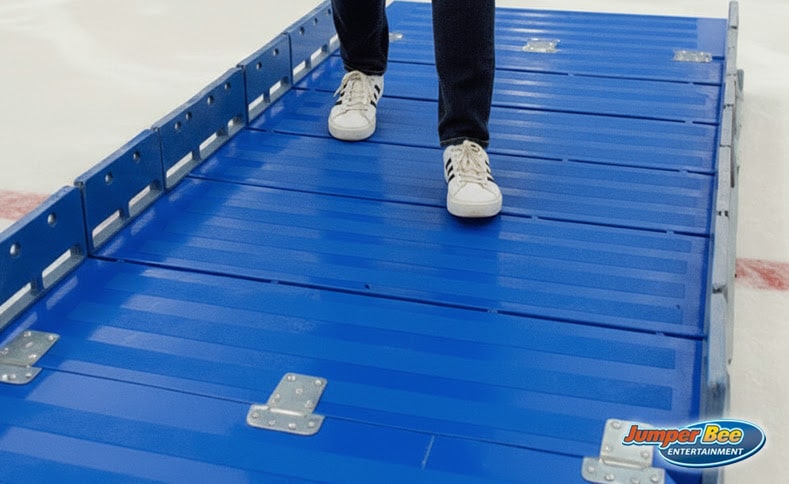
Temporary rinks run into problems with accessibility. Plywood sheets laid over grass can be a quick fix. But wet plywood gets dangerously slick, and that can lead to serious accidents. What you actually need are synthetic ice surfaces or heavy-duty rubber mat systems that remain stable and firm even when the ground underneath isn’t level. The Paralyzed Veterans of America has published some guides for outdoor recreation spaces that go into detail about these requirements.
Surface gaps are another big concern that builders usually miss. Any gap wider than 0.5 inches is enough to catch a wheelchair’s front casters and bring a visitor to an abrupt stop. I’ve seen many places ignore this detail until a visitor gets hurt.
Edge protection is definitely necessary anywhere your path has a drop-off of any height. Wheelchairs can roll off edges pretty quickly without the right barriers in place.
Where Your Wheelchair Seats Should Go
Wheelchair accessibility standards for temporary ice rinks have become much more specific over the years. Federal laws now say that 1% of all your seating has to accommodate wheelchairs. 1% sounds manageable on paper. But the hard part is meeting the other requirements that have that 1%.
Your wheelchair spaces can’t go in one corner of the rink anymore. The United States v. Cinemark USA settlement changed the entire way that we set up accessible seating. Based on that ruling, wheelchair users deserve access to the same quality views as any other patron. Your accessible spaces have to be spread throughout the different sections of your venue. Wheelchair spaces always need to have an accompanying seat right next to them. The accompanying seat can’t be behind the wheelchair or on the other side of an aisle. It needs to be right there side-by-side because families and friends deserve to sit together just like everyone else at your venue gets to.
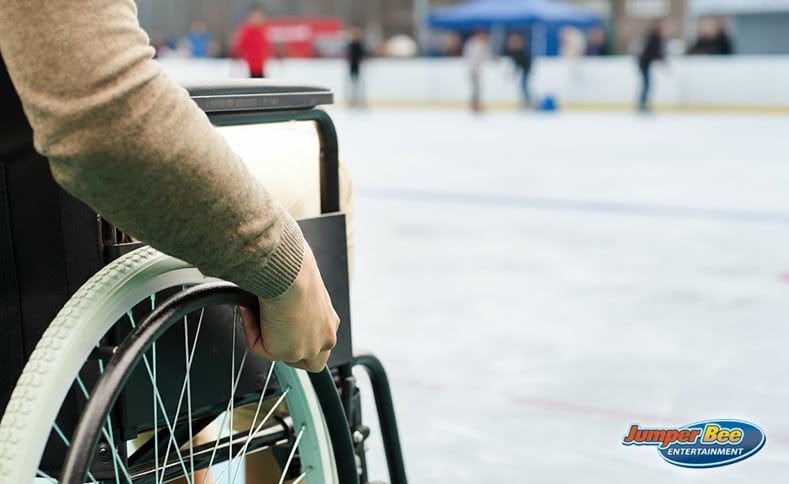
Rinks that have different pricing tiers have another requirement, too. You need to have wheelchair spaces available at the different price levels in your venue. Nobody should have to pay premium prices just because the cheaper wheelchair spaces are already taken.
Removable seats have become a popular option for rink operators who want more flexibility with their layouts. The concept is a practical solution if you plan everything out right from the beginning. You can convert standard seating areas into wheelchair spaces based on demand and still stay compliant with that 1% requirement. Space requirements for wheelchair areas demand that you pay close attention during your planning phase. Every wheelchair position needs to have at least 33 inches by 48 inches of floor space. The mandatory accompanying seat right beside it takes up even more room.
Wide access aisles have to connect these spaces to the main pathways, too. I always tell clients to add about 20% to their first space calculations because the footprint ends up being bigger once everything is in place.
Accessible Restroom Requirements for Your Event
Portable restrooms at temporary ice rinks have to follow the same accessibility requirements as any other public facility. At least 5% of the units need to be accessible for wheelchair users. The Advocacy Center v. Festival Fun Parks case actually settled this question once and for all a few years back. Temporary events don’t get a free pass on restroom requirements just because the bathrooms aren’t permanent.
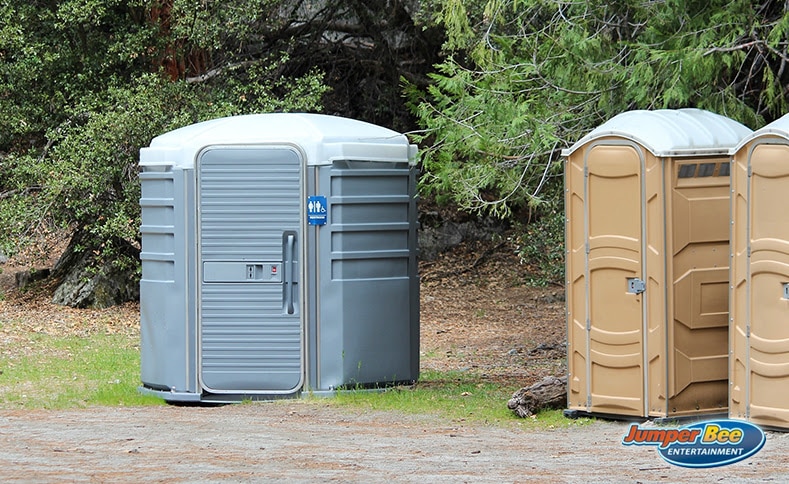
Rental businesses usually say their portable units meet the accessibility standards. The problem is that a lot of these units don’t actually meet the legal requirements when you look at the specifics. The door opening needs to have at least 32 inches of clearance for a person to pass through comfortably. Grab bars have to be positioned at just the right height - between 33 and 36 inches from the floor. The interior also needs enough room for a wheelchair to turn around, and that means a full 60-inch circle of open space.
Grab bars are actually one of the most common problem areas that I run into with these units. The height is almost never right where it needs to be. Either they’re mounted way too high for a person to reach from a seated position, or they sit too low to be useful for transferring. Ramps are another common issue worth checking. Some of them are way too sharply angled for safe wheelchair access, and plenty of them are missing the necessary edge protection that prevents wheels from sliding off the side.
Warming huts and rental counters have their own set of requirements to think about as well. Every counter where money changes hands or equipment gets picked up needs at least one section that sits no higher than 36 inches. Concession stands follow the exact same law. A single high counter with no lower section won’t meet the legal standard, even if the staff members are willing to come around and help.
Accessible bathrooms work best when they’re located close to accessible parking areas. It just makes sense. A frozen December parking lot is already hard enough to get across without adding unnecessary distance to the equation. Keeping everything in one convenient cluster cuts down on travel distance and makes the entire experience better for everyone who needs these features.
Weather Challenges for Your Texas Ice Rink
Texas actually has accessibility standards that are a bit stricter than what the federal government mandates. The state rolled out the Texas Accessibility Standards back in 2012, and they give residents with disabilities some extra protections that federal law doesn’t cover. These standards are especially relevant because of how wild our weather can be down here. One week we could get ice storms, and the very next week we’re seeing 80-degree heat waves - all in the middle of winter.
Drainage is probably the number one issue that temporary ice rinks face in Texas. Our weather changes so fast that the ice can melt fast, and all that water has to go somewhere. It tends to pool up around the rink area, and wheelchair users literally can’t get through those puddles. The Texas Department of Licensing and Regulation has been pretty strict about this. They’ve actually issued fines and citations to a few seasonal rinks in Houston and Dallas just in the past couple of years.
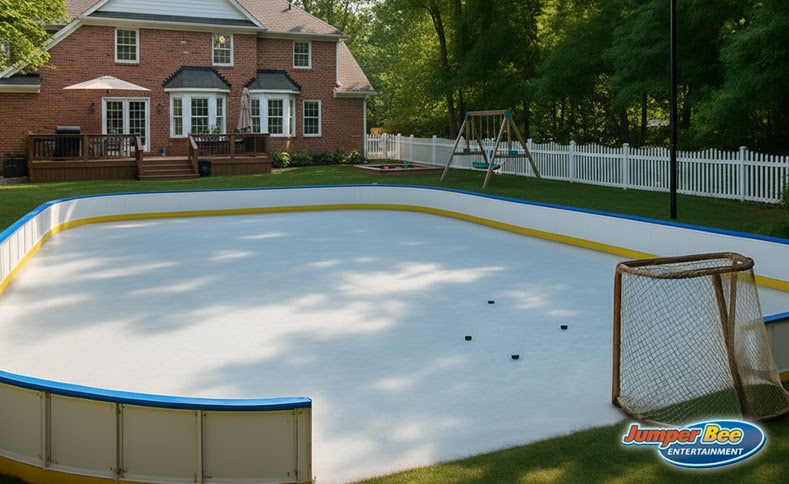
Wind is also a major issue for Texas rinks. Our winds are strong enough to topple temporary structures that aren’t anchored correctly. They can also grab hold of the rubber mats or temporary flooring and literally peel them right up off the ground. Once those materials start lifting, you have trip hazards everywhere and uneven surfaces that break every accessibility law in the book.
Every city in Texas also has its own set of permit requirements on top of the state laws. Austin’s requirements are different from Fort Worth’s, and neither one accepts the other’s procedures as valid. Smaller towns usually have less involved permit processes, but they’re still going to hold you to the state accessibility standards. I’ve seen some municipalities that demand very detailed drainage plans before they’ll even think about approving a temporary rink permit. Other cities focus more on structural stability certifications and emergency vehicle access routes.
Start Your ADA Work Three Months Early
Most temporary ice rink operators have no idea that ADA planning needs to happen at least three months before they open their doors to the public. Many operators try to handle accessibility requirements at the last minute - it’s a recipe for disaster. The rush fees alone can double or triple your compliance costs, and that’s if you can even find contractors who are available on short lead time. The inspection process is extensive. You have to schedule an inspector to come out and check your entire site to find potential barriers. Then there’s the coordination with local disability advocacy groups - these groups are great at finding accessibility problems that even experienced planners might miss. After that’s done, you still have to wait for the building department to review everything, and in most cities, that review process alone takes a few weeks minimum.
The San Antonio Riverwalk rink is actually a perfect example of how to do this right. They opened with just the essential accessibility features in place, and then each season for the next three years, they kept adding more improvements based on customer feedback. Now their rink is one of the most accessible temporary installations in Texas, and it’s because they were patient and committed to continuous improvement.
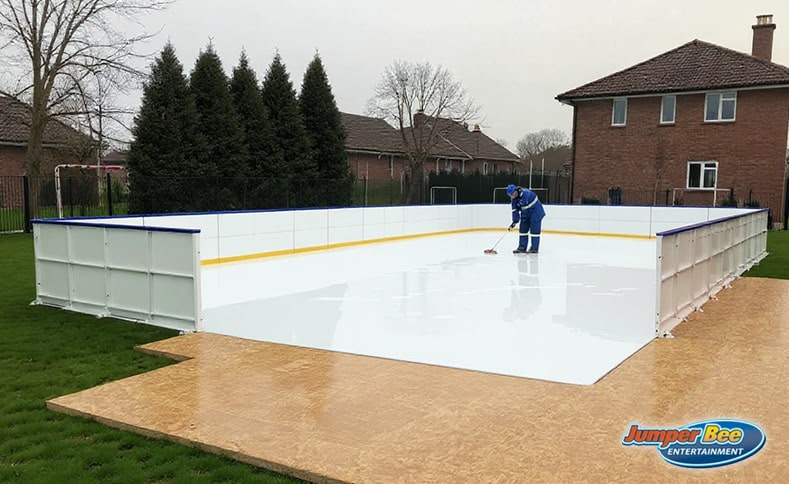
Accessibility features are going to run you somewhere between 12% and 15% of your total installation budget. That percentage seems like quite a bit when you’re already watching every dollar, but it’s a fair price for what you get in return. The ramps need to be built to specific grades and widths. The accessible bathrooms require more space and particular fixtures. The wider pathways also mean more materials and labor costs.
An ADA coordinator can save you from massive problems if you bring them in early enough in your planning process. Maybe your perfect rink location sits right in the middle of a historic district where every modification has to be approved by a preservation board. Or you could have flood plain restrictions that limit what structures you can build and where you can put them. A skilled coordinator knows how to work within all these constraints and still meet every accessibility requirement on the books.
Make Your Party Unforgettable
A temporary ice rink for your community is a big project to take on. But it’s mainly about keeping everyone safe as you build something that the entire neighborhood can love and use. The money that you’ll spend on proper entrance ramps, wider pathways, and accessible restrooms is pretty minimal compared to legal issues or the reputation damage that could happen if anybody gets injured or thinks that they can’t participate.
Accessibility is actually one of the smartest business decisions you can make, and it also happens to be the right choice for your community. Residents with disabilities and their families have billions of dollars in collective spending power nationwide, and they actively search for venues where they know that they’ll be welcomed and accommodated.
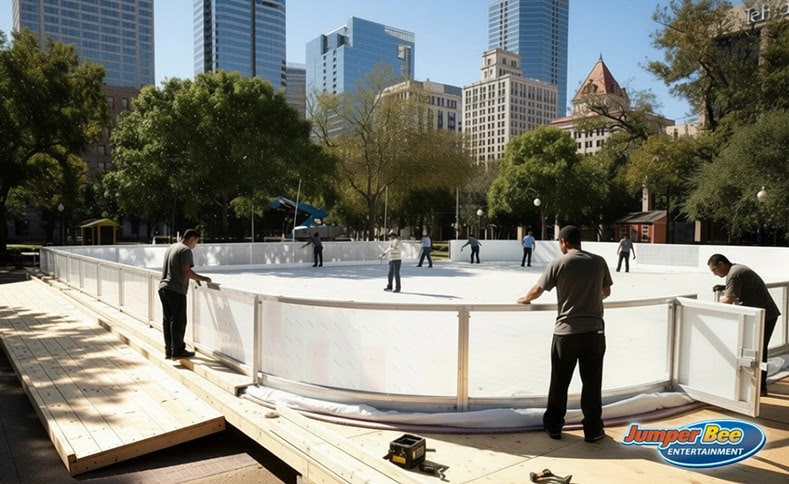
Accessible design actually helps many more visitors than just the ones who need it most. Those wheelchair ramps are the exact same ones that parents with strollers use every day, and delivery crews need them for their heavy carts too. Older visitors with walkers benefit just as much. Wide pathways give everyone room to move at their own pace and stay comfortable. Newcomers can find their way around without any problems or confusion when you’ve installed helpful signage. An ice rink that’s designed for everyone from day one turns into a community gathering place where anybody can have winter fun regardless of their mobility or age.
Winter fun and community events are our specialty here in North Texas. We’ve been the favorite party rental company for Dallas-Fort Worth families and businesses for years. Water slides, arcade games, bounce houses, carnival games - we have it all and then some. Give us a call for a free quote, and we’ll help you throw a party that everyone will remember. Jumper Bee Entertainment has you covered!
Leave a comment
Be the first to share your thoughts.