
 By James Parsons
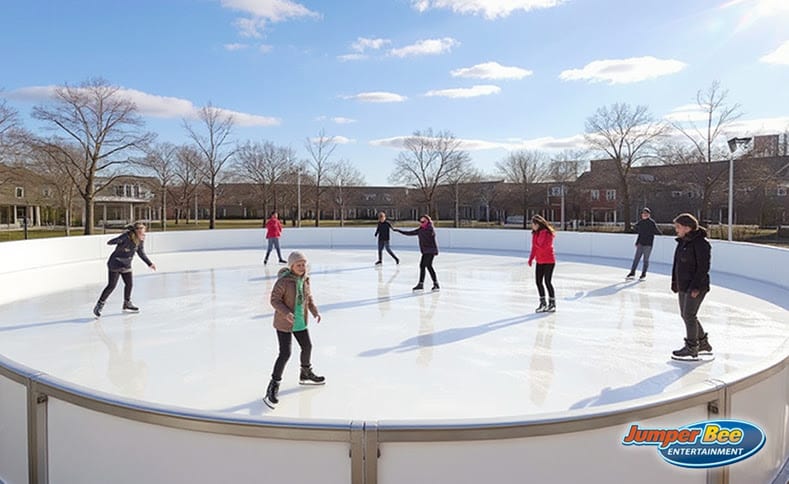
Ice rink rentals in Texas have an insurance headache that nobody prepares you for. You probably know that you need liability coverage, of course. But the laws and options get murky fast. Texas makes everything harder because of the brutal heat that pushes the refrigeration systems to their limits, along with a legal system where accidents on the ice can reach six-figure settlements very fast.
The financial exposure here is no joke. One bad accident without the right coverage could destroy your business and drain your personal accounts. Natural ice requires mechanical equipment failure protection for the refrigeration equipment that has to fight off the 100-degree weather. And the synthetic rinks aren’t much better - they come with their own problems like friction burns and surfaces that buckle in the extreme heat.
Weekend party rentals need different coverage than a full-time operation. But the Texas courts won’t cut you any slack either way when a customer breaks an ankle on your rink.
Here are the insurance essentials to get your ice rink rental protected!
Liability Coverage for Your Ice Rink
When renting out an ice rink in Texas, the first question any venue is going to ask for is proof of general liability insurance. And they’re not messing around either - most places want to see at least $1-2 million in coverage. That number probably seems pretty high for just renting some ice time. Once you think about all the ways someone can hurt themselves on the ice, that coverage amount actually starts to make a lot more sense.
General liability is what protects you financially whenever somebody gets injured at your rink. This means accidents in the lobby area, collisions between skaters out on the rink and even injuries from poorly maintained rental equipment. Texas courts are especially strict about these types of claims. The state has premises liability laws that say property owners are responsible for any unsafe conditions they either knew about or reasonably should have known about.
Many venue owners believe that skaters automatically accept all the danger the second they lace up their skates and step onto the ice. Texas law doesn’t actually work that way, though. The courts are going to check if you took the right steps to keep everyone safe. They’ll want to know if you posted adequate warning signs around the facility. They’ll check if your equipment was well-maintained and checked frequently. They’ll even look at whether you had enough staff members supervising the ice during your event. These factors all become very important if somebody decides to file a claim against you.

Participant accident insurance deserves a place on your radar, too. It acts as an extra financial safety net for everyone at your event. The coverage pays for the medical costs when an attendee gets injured, and it doesn’t even matter if you were at fault or not.
The insurance providers are going to dig deep into the specifics of how you’ll run your rink rental. They need to know what your policies are about the safety equipment requirements. They’ll want to have information about any age restrictions you’re planning to enforce for different skating activities. Staff training procedures and supervision protocols are also high on their list of concerns. Demonstrating strong safety measures and protocols usually translates into lower premium rates.
Insurance Coverage for Ice Rink Equipment
You’ll be dealing with completely different insurance requirements when choosing between real ice and synthetic ice for a Texas rink rental business, and the difference can be difficult to manage if you’re not prepared for it. The refrigeration equipment by itself needs specific coverage that standard business policies don’t include, and there’s a valid reason for that.
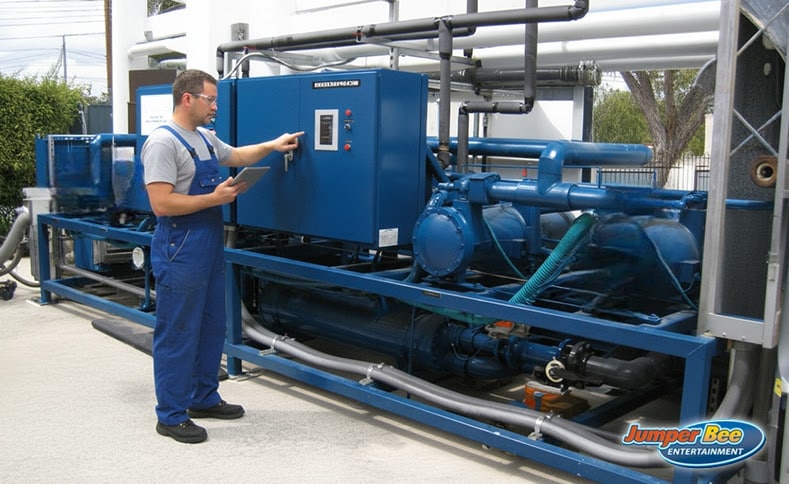
Those compressors and chillers you’ll need are going to work very hard in the Texas heat. We’re talking about equipment that has to maintain the ice at 22 degrees F when the temperature outside hits 105 degrees F or higher, and this temperature differential puts tremendous strain on every component. Insurance providers are well aware of the dangers involved here, and that’s why they’ll insist you buy a separate mechanical equipment failure policy on top of your standard coverage. These extra riders can add a few thousand dollars to your annual premiums, and that’s going to feel excessive. But you don’t have much choice if you want adequate protection for your investment.
Ice quality represents its own set of challenges from an insurance perspective. Texas weather has a way of creating soft areas and puddles much faster than you’d see them in cooler climates. Your ice surface might look pristine at 10 a.m., and by noon, you could have dangerous water pools showing up where customers could slip and fall. Any liability insurance you get has to take these fast condition changes into account, and many insurers actually want to perform on-site inspections of your ice maintenance procedures before they’ll agree to write a policy at all.
Environmental liability is a part of ice operations that tends to get missed until it’s too late. A refrigeration system that develops a leak and releases ammonia or other coolants into the environment can trigger cleanup costs that run into the hundreds of thousands of dollars. You’ll need to buy separate environmental liability coverage since most standard business policies specifically exclude pollution-related claims. The 2021 Texas power grid failure drove this point home for rink operators across the state - dozens of rinks ended up filing claims for their melted ice and damaged refrigeration equipment after the power stayed off for a few days straight.
Business interruption insurance is something that you need for ice operations - even though lots of operators try to skip it to save money. A single broken compressor can force you to close your doors for weeks as you wait for specialized parts and technicians to finish the repairs, and without the right coverage, you’re stuck with those lost revenues yourself.
Types of Insurance for Your Business
The type of insurance you’ll need for your ice rink depends on the frequency of your rentals. A single birthday party needs very different coverage from a rink that’s up and running every weekend. And most venues throughout Texas will ask for proof of insurance before they’ll allow you to set anything up on their property.
A short-term policy is probably your best bet when you’re only planning a single event, and these usually run just a few hundred dollars. These particular policies are designed to cover that one party or corporate event and nothing more. But an annual commercial policy makes more financial sense when your plan is to rent out your rink on a steady basis, even though the upfront cost is a few thousand dollars per year.
Mobile ice rink operations have their own challenges that operators don’t think about until they’re already knee-deep in the business. You’ll need commercial auto coverage since you’re hauling the rink all over town throughout the year. The loading and unloading process needs just as much protection, too. A ramp panel can slip as your crew is setting everything up and could hurt a worker or damage a customer’s property in seconds. These are the exact scenarios where you’ll be grateful for the right coverage.

The frequency of your rentals has a direct effect on what you’ll pay for insurance. A rink that only operates on weekends will have lower premiums than one that’s open to the public 7 days a week. Insurance providers calculate your exposure to claims and then set their prices based on that calculation.
Permanent ice rink locations need an even bigger insurance package. The building and all your equipment need property insurance protection. Spectator liability coverage is another piece you’ll need because plenty of the visitors who come through your doors won’t actually be skating. Parents sit on the sidelines to watch their kids and friends hang out around the rental counter to talk.
Texas weather introduces another factor for seasonal operators. The coverage levels you need during the busy winter months could be excessive for the slower summer period. Some insurance providers have flexible policies that allow you to scale your coverage up or down to match your operating schedule throughout the year.
Texas Weather and Legal Rules
Texas insurance for ice rinks comes with a unique set of challenges that you won’t necessarily face in other states. The weather alone creates enough problems to worry any rink owner. Hurricane season brings serious flood dangers to coastal areas, and tornadoes can show up just about anywhere in the state with little warning. These natural disaster threats translate directly into higher property coverage costs, and you’ll probably feel it in your premiums compared to what rink owners pay in states with milder weather patterns.
The Texas Recreation Immunity Statute does give you some level of protection as a rink owner, but it’s not total protection. You still need strong liability insurance because this law only kicks in when customers actively use your facility for recreational purposes. A customer who slips on a wet spot in your lobby or trips over a crack in your parking lot won’t be covered by that statute at all, and you’ll be responsible for those injuries without the right insurance.
Texas uses what’s called a modified comparative negligence law, and this directly changes the way that injury claims get handled at your facility. The basic idea is that if a skater bears more than 50% of the responsibility for their own injury, they won’t be able to get any damages from you. But if they’re found to be just 49% at fault or less, you could still owe them compensation for their injuries. This legal framework makes it very important to have full liability insurance for your business, despite the state’s recreational immunity protections already in place.

The massive power grid failures back in February 2021 shifted the way that rink owners across the state think about business interruption insurance. A synthetic rink that can’t operate without electricity or a real ice surface that melts during an extended power outage needs to have specific coverage that actually covers these scenarios. Many of the standard policies don’t include coverage for losses that stem from utility failures, so you should check carefully what your policy does and doesn’t cover before you sign anything.
Local permit laws are all over the map in Texas, and what flies in one city might not work at all in another. Houston’s requirements look nothing like what Dallas needs, and Austin has its own completely different set of requirements to follow. Your insurance company is going to want to see documentation that proves you’re in compliance with all relevant local laws before they’ll even think about writing you a policy.
Pick the Right Coverage for Your Rink
Insurance costs for ice rink setups can differ quite a bit across the board. Small party rental operations usually get annual premiums somewhere around $3,000 to $5,000 for their basic coverage packages. Seasonal rinks that run for just part of the year usually see those numbers climb to $8,000 or $10,000 per year. Insurance companies usually charge more for equipment that sits unused for a few months at a time, and they price their policies accordingly. Year-round rinks face the steepest premiums of all, though their risk profiles are actually more predictable than seasonal operations, which sometimes helps during negotiations.
Deductible amounts make a real difference in what you’ll pay for coverage each year. A $5,000 deductible can knock your premium down by about 30%, which looks like a win until you find out you’d need to have that cash ready to go the second a claim gets filed against you. Coverage limits are the same way, and after working with dozens of rink operators across Texas, I’ve learned that $2 million in liability coverage tends to hit the right balance. You get solid protection that actually covers what you need without the premium costs completely wrecking your budget.

A handful of insurance carriers now sell these hybrid packages that cover synthetic ice and traditional ice surfaces all in one policy. You can save a decent amount of money with these if your facility uses different ice types throughout the year or for different events and programs. What they don’t always tell you up front is that some of these policies will exclude specific activities on one surface but allow them on the other, so you need to read through the entire contract.
Geographic location within Texas matters a lot in your rates. Rinks in Houston always pay higher premiums than similar operations in Amarillo, and the reason is pretty simple. Insurance carriers meticulously track every slip-and-fall incident by zip code, and they adjust their pricing models to line up with the litigation patterns in each area. Cities with more legal claims just cost more to insure.
Premium payments represent just one part of your total protection budget. Most insurers also mandate specific safety program implementations, and they need you to have certified staff members on your payroll, which adds considerably to your total operating costs.
Make Your Party Unforgettable
The right insurance for your ice rink depends on what type of rink you’re planning to build or run. After researching all the different coverage options and state laws out there, it’s become apparent that no two ice rinks need quite the same policy. Once you sort through all the main factors, though (maybe you’re only doing a weekend winter festival versus a year-round facility, or you’re expecting hundreds of skaters versus just a few dozen), the whole process starts to make a lot more sense. Insurance feels hard when you first start researching it and probably always will to some degree. Breaking it into smaller pieces, though, makes each piece easier to manage on its own.
The insurance world for ice rinks has changed dramatically over the past few years, and that’s actually fantastic news for operators. Insurance providers have finally started understanding that ice rink owners need a lot more flexibility than the old standard policies used to offer. You can now find carriers who bundle traditional liability coverage with protections for weather-related closures, equipment breakdowns and even specific event disruptions. This change matters especially in Texas, where a sudden heat wave or an ice storm can completely upend your operations, and where the premises liability laws keep operators always aware of their legal responsibilities.

My strongest recommendation would be to connect with an insurance agent who specializes in Texas recreational venues instead of trying to piece together generic information online. Every ice rink has its own features that affect its coverage needs, and an experienced local agent will identify important details that you might overlook during planning. They know which carriers have the best rates for rinks, the policy exclusions to watch for and what kinds of claims actually happen the most in our state. Their experience with other rink operators comes in very helpful when you’re trying to avoid common mistakes.
At Jumper Bee, we know just what it takes to pull off a safe and memorable event because we’ve been the trusted party rental company in the greater Dallas-Fort Worth area for years. Our inventory has it all - water slides, bounce houses, arcade games, carnival attractions and lots more. We’d love to help make your next event one to remember, so reach out for a free quote and let us at Jumper Bee Entertainment take care of all the fun parts as you relax and spend time with your guests at the party.

Leave a comment
Be the first to share your thoughts.